Free shipping across India on orders over ₹1,499 · See this season’s offers

Home / Know Your Ingredients / Bhut Jolokia Chilli
Sacred Fire & Smoked Preservation: the Ghost Pepper of Northeast India
Hearth-smoking traditions and the careful kitchen use of one of the world’s hottest chillies.
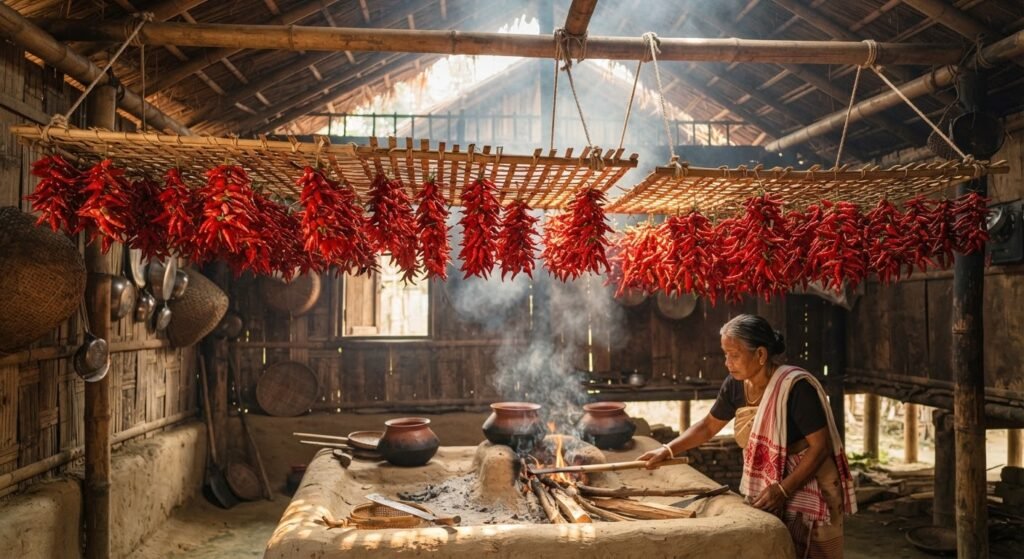
“Beyond its 1,000,000+ Scoville fire lies a preservation craft: pods hung in wicker lofts over alder-wood embers, smoked slowly so the oils set without scorching the fruit.”
At a glance
- Botanical nameCapsicum chinense × frutescens
- RegionGolaghat Valley & Naga foothills
- Coordinates26.52° N, 93.97° E · 112 m
- HarvestAugust – November
- Grown byMising & Naga growers
- Heat1,001,304 SHU
Text and photos on this page are sample content from the mockups. Replace them with your own before launch.
Chapter 01
The Naga King Chilli: From Royal Hearth to Sacred Ward
In the undulating rainforest ridges where the Brahmaputra alluvial basin gives way to the Patkai hills of Nagaland, the pepper known natively as Raja Mircha, Bhoot Jolokia, or Bih Jolokia (“poison pepper” in archaic Assamese) occupies a realm distinct from mere table seasoning. It is an ancestral ward and protective botanical technology.
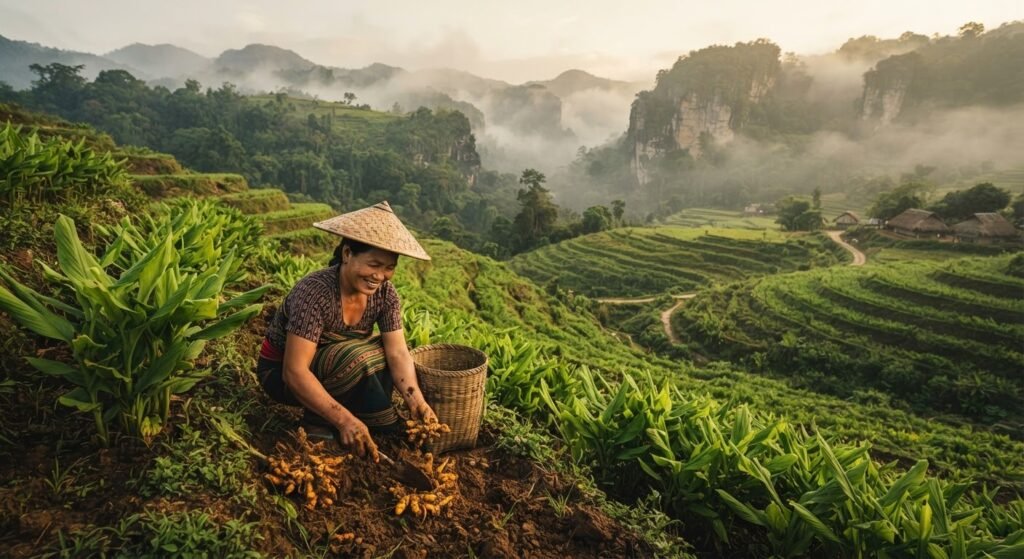
For centuries, Mising and Naga agriculturalists cultivated these unevenly crinkled pods along the edges of forest gardens. The plant’s formidable secondary metabolite matrix served as a biological defense: crushed pods smeared across perimeter jute ropes repelled migrating wild Asian elephants from encroaching upon winter paddy reserves without inflicting lasting physiological harm.
Within the domestic hearth, the pepper functioned as a bioclimatic shield against torrential monsoon mold. By smoking the harvest immediately after picking, indigenous families locked volatile aromatics into the pod’s outer walls, allowing precious capsaicinoid fats to stabilize without microbial rot.
Chapter 02
The Brahmaputra Alluvial & Hill Terroir
Why translocated ghost peppers cultivated outside Assam and Nagaland fail to synthesize identical ester complexity: the defensive alchemy of hyper-humidity and acidic mountain soil.
Commercial indoor cultivation of ghost chillies in non-native soil loses up to 43% of aromatic monoterpenes and the distinctive passionfruit ester signature.
Monsoon Moisture & Saturation
Relative air humidity of 85–92% during July flowering exerts high biotic selection pressure. The plant naturally upregulates capsaicinoid synthesis as a defensive shield against tropical fungi, yielding superior defensive chemical concentrations.
Acidic Laterite-Alluvium
Brahmaputra silt mixed with ancient decomposed rainforest humus yields an intensely acidic soil profile (pH 5.0–5.8). High bio-available iron and manganese levels catalyze secondary volatile aldehyde creation, giving the fruit its signature tartness.
Diurnal Stress Cycles
Subtropical afternoon canopy heat reaching 32°C collapses abruptly into crisp mountain drafts of 18°C as Himalayan winds funnel down the river gorge. This dramatic 14°C diurnal swing crystallizes fruit sugars alongside alkaloid precursors.
Chapter 03
The Four-Stage Alder-Smoke Cure (Dhunda)
Whole ghost peppers cannot simply be dehydrated in mechanical electric tunnels; fast dehydration blisters the cellular walls, releasing capsaicin unpredictably and leaving behind acrid bitter residues. The ancient Mising Dhunda method preserves both skin elasticity and gentle fruitiness.
01
Sun-Wilting ("Roud-Porua")
Harvested pods rest on hand-woven bamboo mats under shaded canopy light. This sheds 18% of free epidermal moisture without inducing cellular stress or heat-bruising.
02
Wicker Loft Stacking ("Dhwa Chang")
Pods are arranged in a single layer on elevated split-cane wicker frames suspended exactly 7 feet over domestic clay hearths, shielded from open sparks.
03
Alder-Wood Cold Smoke ("Kath-Dhoong")
Smoldering local alder branches and green bamboo shavings generate a gentle, cool 42°C woodsmoke. Phenolic compounds penetrate the outer skin, sealing natural capsaicin oils.
04
Hermetic Ash & Terracotta Curing
Smoked pods rest inside unglazed terracotta urns cushioned with sifted wood ash. Ash absorbs stray moisture naturally, preserving the chili for years without artificial preservatives.
Chapter 04
The Scoville Gradient & Molecular Thermodynamics
Purity verified through High-Performance Liquid Chromatography (HPLC). Ghost pepper heat is not a momentary flash, but a sustained systemic warmth calibrated by complex capsaicinoid ratios.
In pure Bhut Jolokia, long-chain dihydrocapsaicin molecules bind selectively with TRPV1 vanilloid nerve channels deeper in the soft palate. The warmth builds gently over 30 to 45 seconds, peaking in a deep, radiant warmth that sparks endorphic calm rather than sharp stinging pain.
TRPV1 Receptor Binding: The "30-Second Crest"
Ordinary chilis release rapid heat via short-chain capsaicinoids that stimulate superficial tongue receptors immediately.
Chapter 05
Sensory Profile & The Flavour Paradox
Those who know ghost pepper only as extreme heat overlook its culinary paradox: behind the heat lies an aromatic symphony of passionfruit, sun-dried apricot, and sweet hickory.
Chromatic Identity
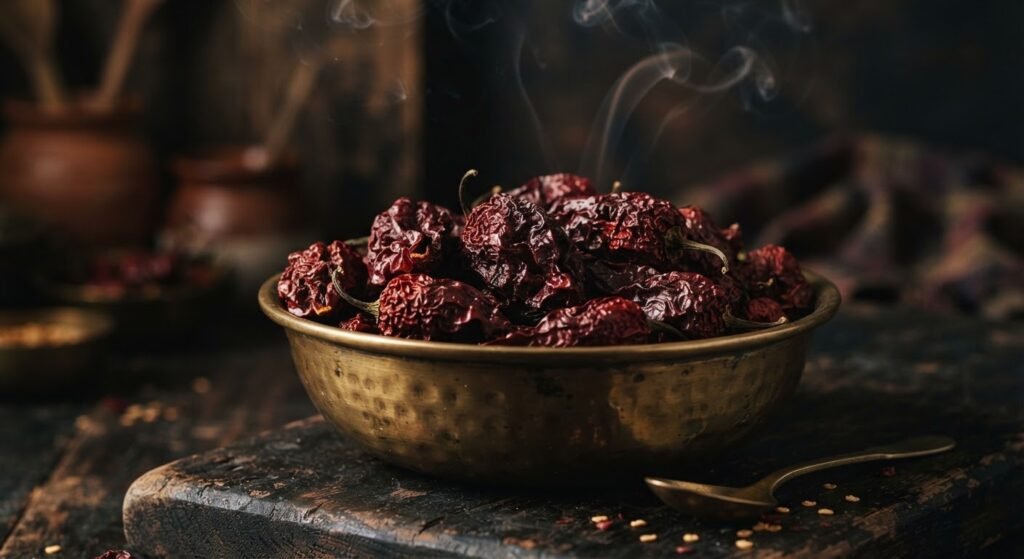
Deep burnt burgundy to oxidized garnet red. Tactile pebbled epidermis cured with a natural satin sheen from cold alder smoke, free from sulfur polishing.
Olfactory Complexity
Pungent pipe-tobacco, dried wild apricots, smoldering sweet hickory, and green peppercorn top notes, free of sharp vinegary undertones.
Palate Evolution
A gentle hint of passionfruit and tamarind sweetness lingers on the front palate before deep, glowing warmth expands outward across the chest.
Digestive Harmony
Natural antimicrobial oils stimulate gastric blood flow, increase digestive secretions, and encourage sustained metabolic warmth.
Chapter 06
The Art of Tempering: Harmonious Preparations
In Assam and Nagaland kitchens, Bhut Jolokia is never dumped hastily into a pan. It is tempered with fats and alkaline broths to unfold its flavor without overwhelming the dish.
Capsaicin is a fat-soluble lipophilic molecule. If hands or utensils encounter pod oils, cleanse with vegetable oil, whole cream, or butter. Never rely on water alone, which spreads the oils.
Store in an airtight amber jar away from direct sun. Properly sealed whole smoked pods retain their aromatic depth for over 24 months.
Khar & Fermented Bamboo Shoot Infusion
Slow-simmering half a pod in alkaline banana-ash water (Khar) alongside tender young river fish and winter mustard greens. The high alkaline balance mellows the fiery capsaicinoids into rich floral undertones.
Cold-Pressed Mustard Oil Finishing Drizzle
Submerge 1 whole smoked pod into 250ml raw cold-pressed kachi ghani mustard oil. Keep sealed in amber glass for 14 days; the rich mustard lipids extract fat-soluble capsaicinoids for an aromatic finishing oil.
Wild Forest Honey & Ghost Pepper Glaze
Macerate a small sliver (1/8th pod) into warm, raw multifloral forest honey. Drizzle across roasted winter tubers, braised autumn squash, or aged artisanal mountain cheeses.
Micro-Dosing & Culinary Neutralization
For a family meal of four, slice off only 1/8th of a single whole pod. Avoid opening seed glands unless preparing an intense oil infusion.
Chapter 07
Field Integrity vs. Industrial Commodity
Why Grinoz protects true single-origin pods rather than mass-market powders diluted with fillers and synthetic dyes.
GI Tag Protection
Grown exclusively within the certified terroir corridors of Assam and the Naga hills under GI registration standards.
Zero Chemical Additives
Batch-tested to guarantee zero synthetic Sudan Red dyes, artificial capsaicin extract fortification, or anti-caking silica dust.
Fair Harvester Equity
Sourced through direct relationships with Mising and Naga grower groups at nearly three times wholesale spot market rates.
Pure Alder Smoke
Cured with natural woodsmoke rather than industrial chemical liquid smoke flavorings or rapid diesel-powered dehydrators.
Questions
Common questions
Why whole smoked pods over ground flakes?
Whole pods protect interior capsaicin sacs from oxidation. Ground powders lose their delicate passionfruit esters within weeks, leaving behind harsh, one-dimensional heat.
How do I rehydrate dried pods for cooking?
Soak the pod in warm water for 15 minutes to soften its crinkled skin, or drop it directly into simmering broths, braises, and curries to infuse flavor slowly.
Does touching the dry skin burn bare fingers?
An intact, undamaged pod is safe to handle. However, cutting or breaking the skin releases potent capsaicin oils. We suggest handling cut pieces with tweezers or gloves.
What makes Grinoz Batch #BJ-14 unique?
Harvested in small batches during the crisp October flush in Golaghat, this lot underwent a 72-hour alder-wood smoke cure to yield over 1,001,000 certified Scoville Heat Units.
Taste it yourself
Bhut Jolokia Chilli
Sun-cured and slow-smoked whole pods with bright citrus notes beneath a formidable, lingering heat.
From ₹490Buy nowAdd to cart This product has multiple variants. The options may be chosen on the product page
Keep reading